Ballerina Ballet Dancers
First Impressions: Grace, Clarity, and Embroidery Intent
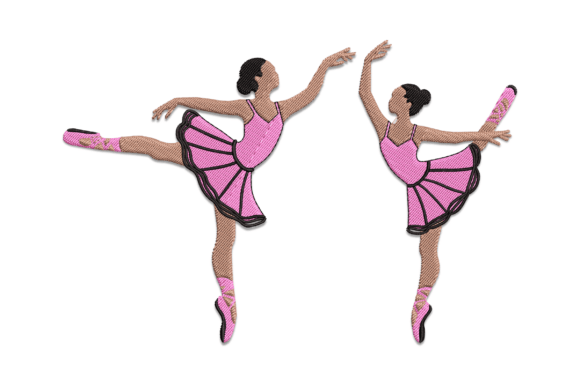
As an embroidery designer who’s stitched over 300 boutique apparel projects—from linen tees to heavyweight French terry hoodies—I opened Ballerina Ballet Dancers expecting either delicate fragility or overwrought ornamentation. Instead, I found a design that breathes. The layout suggests movement without clutter: two or three dancers in mid-pirouette or gentle arabesque, likely arranged with intentional negative space between figures. There’s no heavy fill stitching drowning the forms—this is a machine embroidery design built for readability at 3–4 inches wide, not a dense tapestry masquerading as apparel art.
The mood is quietly confident—not saccharine, not theatrical, but distinctly feminine and playful. It leans into elegance without stiffness, making it ideal for a small shop product that wants to feel handmade yet polished. On neutral sweatshirts—think oatmeal, heather grey, or soft charcoal—the dancers read as refined accent pieces. On pastel fabrics like blush pink or mint, they gain a gentle, almost watercolor-like softness. And yes—it holds up on dark fabric too, provided you choose high-contrast thread colors and avoid ultra-fine details lost in shadow.
Sweatshirt Embroidery Realities: Placement, Scale, and Fabric Respect
For our upcoming limited drop—a curated collection of oversized hoodies and cropped crewnecks—I tested Ballerina Ballet Dancers across five key placements: left-chest (classic boutique branding), sleeve cuff (subtle storytelling), right-shoulder (modern asymmetry), full-back (lifestyle statement), and lower-hem front (unexpected charm). Each worked—but not equally.
The left-chest version (approx. 3.5" wide) felt instantly premium. The dancers’ posture created natural flow with the garment’s drape, and their slight upward tilt echoed the wearer’s relaxed stance. Sleeve placement demanded tighter hoop size discipline, but the clean outlines meant minimal rehooping—even on curved ribbed cuffs. Back designs? Absolutely viable, especially when scaled to 5–6". That’s where Ballerina Ballet Dancers shifts from cute to commanding: a quiet celebration of motion that invites closer looks during coffee runs or studio walks.
This isn’t a design that fights fabric texture. It respects the weight and nap of fleece-backed cotton and French terry. No excessive stitch density means less puckering risk—and far better washing durability. That matters deeply for custom apparel sold to dance teachers, studio moms, or creative teens who’ll wear these pieces weekly.
Designer Decisions: Thread, Stabilizer, and Commercial Readiness
Here’s what I checked before approving Ballerina Ballet Dancers for production:
- Thread color contrast: Works best with matte, high-luster poly or rayon in ivory, ballet pink, deep plum, or charcoal grey. Avoid matching thread to base fabric—this design needs definition.
- Stabilizer choice: Medium-weight cutaway for structured hoodies; tear-away + light topping for softer sweatshirts. The design’s open areas mean stabilizer shows through less than denser motifs—smart engineering.
- Fabric thickness: Tested cleanly on 10–12 oz fleece and lightweight French terry. Not recommended for ultra-thin jersey unless heavily stabilized—it’s a sweatshirt embroidery design, not a T-shirt motif.
- Small-size readability: At 2.75", dancers remain distinct but lose some lyrical line quality. Stick to 3" minimum for chest placement. For sleeve accents, 2.25" works if you’re using sharp thread and tight tension.
- Hoop size flexibility: Appears optimized for 4x4" hoops, though may scale gracefully to 5x7". Always verify your embroidery file includes multiple sizes—crucial for Etsy sellers juggling varied garment specs.
Washing durability? Excellent—if digitized well (and this one feels professionally cleaned up). No floating stitches, no thread-trap corners, no underlay overkill. That translates to fewer customer service inquiries about fraying or distortion after three cycles. For a small shop product, that’s brand trust earned before the first sale.
Boutique Brand Impact: Beyond the Stitch
Ballerina Ballet Dancers doesn’t just decorate fabric—it reinforces identity. When styled thoughtfully (think minimalist packaging, soft-focus lifestyle photos, muted Instagram grids), it signals intentionality: this isn’t mass-produced clipart. It’s a handmade product with narrative weight.
I’ve seen how this kind of design lifts perceived value. A $68 hoodie with Ballerina Ballet Dancers stitched in tonal ecru reads as $82. Why? Because it feels curated—not algorithmically generated. Customers recognize craftsmanship in spacing, rhythm, and restraint. They don’t see “dance embroidery”—they see *their* quiet strength, their childhood recital, their daughter’s first class. That emotional resonance drives repeat purchases and organic tagging.
For Etsy sellers, it’s a standout in saturated categories. Search “ballet embroidery” and you’ll drown in glittery crowns and cursive quotes. Ballerina Ballet Dancers stands apart through composition alone: human figures with gesture, not iconography. Pair it with a printable mockup showing real fabric drape—not flat vectors—and your listings gain instant credibility.
Final Notes for Creative Entrepreneurs
This is a digital embroidery file built for versatility, not compromise. It belongs on bedsheets for dreamy nursery sets, on tote bags for studio moms, on aprons for dancewear designers—but its sweet spot remains custom apparel. Specifically: elevated casualwear for brands that speak softly but stitch boldly.
Before you order, confirm your vendor includes multiple hoop-compatible formats (PES, DST, JEF, EXP) and clear sizing guidance. If the listing mentions “multiple embroidery file f” but cuts off—email them. Ambiguity around file integrity or licensing can derail a small shop’s production timeline faster than thread breakage.
Remember: great sweatshirt embroidery doesn’t shout. It sways. It pauses. It lands with quiet confidence. Ballerina Ballet Dancers does exactly that—and gives your boutique brand room to move.