Crazy Colorful Bird
First Impressions: Joyful, Bold, and Unapologetically Craft-Centric
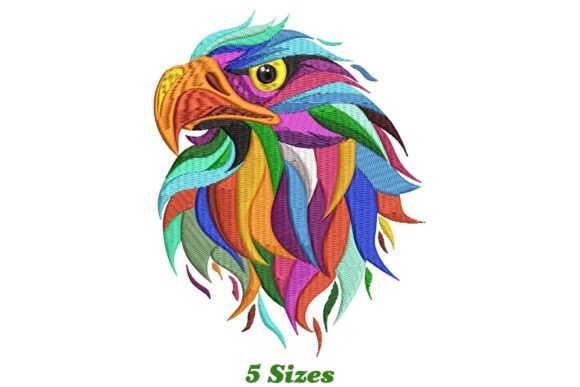
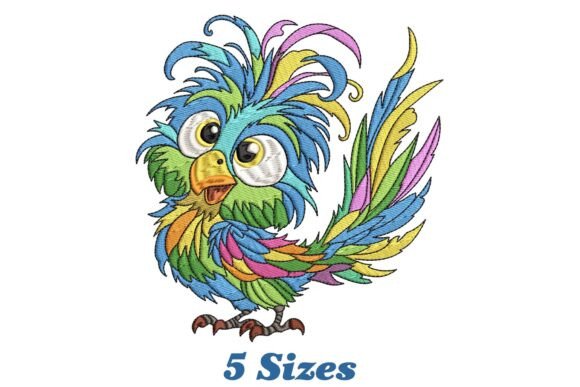
When I opened Crazy Colorful Bird for the first time, my immediate thought wasn’t “cute” or “trendy”—it was “this will hold up.” As a designer who’s stitched hundreds of bird motifs—from minimalist silhouettes to photorealistic finches—I appreciate how this design balances exuberance with structural intelligence. It’s not just busy; it’s *organized* busy. The wings fan outward with confident curve, the beak has personality without sharp angles that snag thread, and the tail feathers layer naturally in staggered rhythm. It feels like a celebration—not a decoration—and that energy translates directly into finished products.
A Real-World Test: Embroidering a Linen Tote for a Local Boutique
Last week, I used Crazy Colorful Bird on a natural linen tote bag—part of a small-batch launch for a neighborhood gift shop. The fabric was medium-weight, slightly textured, and unbleached. I chose a 5×7 hoop and paired it with medium tear-away stabilizer underneath and light cut-away on top. What stood out wasn’t just how vivid the colors popped (especially the turquoise wing accents against warm linen), but how cleanly the satin stitch wrapped around curves and how the fill stitch settled evenly across feather shapes without pilling or distortion. Customers didn’t just say “I love birds”—they paused, tilted their heads, and pointed to specific details: “Look at how the yellow eye shines,” or “That orange stripe on the tail? So crisp.” That kind of engagement is gold for any craft business.
Where It Shines—and Where to Pause
Crazy Colorful Bird thrives on stable, mid-to-heavy fabrics: sweatshirt fleece, cotton twill aprons, tea towels, pillow covers, and structured baby blankets. On these surfaces, its layered color blocks read clearly, and the stitch density supports dimension without overwhelming the base material. It’s especially effective as a tote bag design, where scale and visual impact matter most.
But—and this is critical—don’t rush it onto thin cotton tees, stretchy jersey, or curved cap fronts without testing. The design’s generous wing span and fine feather outlines demand stability. On lightweight t-shirts, I recommend adding a lightweight fusible stabilizer *behind* the fabric *before* hooping—not just under the hoop—to prevent puckering. And while it works beautifully on dark fabric (especially with high-contrast thread choices), avoid pairing deep navy or charcoal with low-saturation pastels unless you’ve tested thread brightness first.
Smart Use Cases for Your Craft Business
- Custom apparel: Perfect for boutique sweatshirts and embroidered patches—its shape reads well even at 4.5" wide, making it scalable for youth sizes and adult backs alike.
- Baby embroidery: Works wonderfully on organic cotton burp cloths and nursery pillows, though I’d skip dense satin areas for newborn onesies unless using ultra-soft thread and minimal density adjustments.
- Holiday & personalized gifts: Paired with simple monogram initials or a short phrase (“Feather My Nest”), it elevates handmade holiday embroidery from crafty to curated.
- Etsy seller & digital product prep: This is a strong candidate for printable mockups—the composition lends itself to clean, lifestyle-friendly renders. Just remember: if you’re reselling the digital embroidery file, confirm licensing terms before listing it as a commercial-use asset.
Design Integrity Meets Customer Trust
Here’s what matters when your buyer pays $38 for an embroidered tote or $65 for a custom pillow cover: they’re not buying thread and fabric—they’re buying intention, care, and visual coherence. Crazy Colorful Bird delivers that because it avoids visual fatigue. Even with multiple thread colors, there’s hierarchy: the body anchors the eye, the beak draws focus forward, and the tail adds movement—not clutter. That clarity builds trust. When customers recognize quality stitching *and* thoughtful design in one glance, they’re more likely to return, tag your shop, or commission a custom piece.
Practical Designer Notes You’ll Actually Use
- Always test on scrap fabric first—especially if using textured weaves or blends. Linen, terry cloth, and brushed cotton all behave differently under needle pressure.
- Check thread color contrast early. Some vibrant threads dull on dark backgrounds; others bleed visually on light ones. Try a black-and-white mockup to assess value balance.
- Review stitch density in your editing software. If you plan to use it on delicate baby items or layered garments (like reversible aprons), reduce density by 10–15% in feather-fill zones—without sacrificing definition.
- Confirm hoop size compatibility before digitizing or resizing. This isn’t a tiny 3" motif—it’s built for presence, so respect its original proportions.
- Inspect small details at 200% zoom: Beak tip, eye highlight, and wingtip edges should be smooth, not jagged or overly dense. If they’re not, a quick cleanup pass saves hours later.
- Use proper stabilizer for your substrate—not just “what’s on hand.” A lightweight cap needs different support than a thick kitchen towel.
- Verify commercial use rights before selling finished products or bundling the machine embroidery design into kits. Licensing varies, and clarity protects your craft business long-term.
Final Thought: More Than a Bird—A Brand Moment
Crazy Colorful Bird isn’t just another birds embroidery file. It’s a conversation starter, a signature accent, and a reliable workhorse for makers who value both charm and craftsmanship. Whether you’re stitching it for a client’s wedding gift, prepping a dozen matching aprons for a cooking class, or building a cohesive line of nursery decor, it carries weight—visually and emotionally. It doesn’t shout. It sings. And in a crowded handmade market, that kind of quiet confidence is exactly what makes your finished product unforgettable.