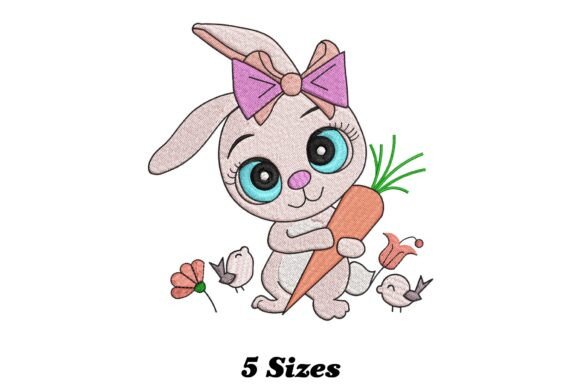
Cute Baby Rabbit Embroidery Design Review
First Impression: Whimsical, Warm, and Brand-Ready
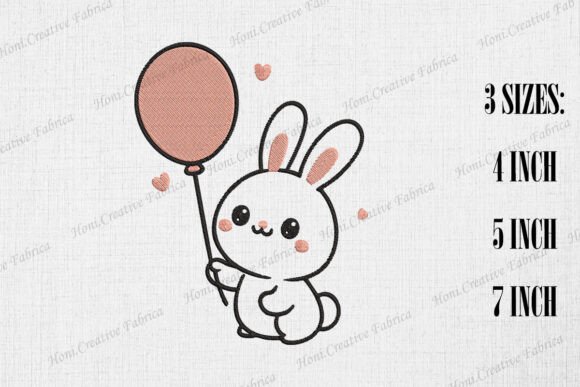
As an embroidery designer who’s developed hundreds of commercial designs for small businesses—from indie bakeries to pet boutiques—I immediately recognized Cute Baby Rabbit as more than just a decorative motif. Its title and description signal approachability and charm, but what matters most is how it translates into real-world brand assets. This isn’t a generic clipart rabbit—it reads as hand-drawn, softly detailed, and intentionally scaled for personality over precision. That makes it ideal for brands leaning into warmth, care, and authenticity—think local florists, handmade baby goods shops, or nature-themed cafés. In the Woodland Animals category, Cute Baby Rabbit stands out for its gentle expressiveness, not complexity. It feels handmade without sacrificing polish—exactly the balance small business merch needs to convey sincerity *and* professionalism.
Where Cute Baby Rabbit Shines in Business Use
This machine embroidery design excels where small businesses need versatility and emotional resonance: on embroidered patches, staff aprons, tote bag fronts, cap brims, and boutique product tags. As a chest logo on café staff uniforms, it adds friendliness without overwhelming formality. On a linen apron for a ceramic studio, it reinforces artisanal charm. For a pet brand selling organic toys, it becomes a subtle signature on woven labels or packaging accents. Etsy sellers can pair Cute Baby Rabbit with neutral thread colors (oatmeal, slate grey, moss green) to create cohesive, printable mockups that elevate perceived value. Even as a sleeve detail on custom apparel for a children’s bookstore or local library event, it communicates playfulness while maintaining legibility at 3–4 inches wide. Its whimsical tone doesn’t dilute professionalism—it humanizes it.
Real-World Applications That Deliver ROI
- Embroidered patch: Works beautifully as a sew-on or iron-on badge for staff jackets or customer gift sets—especially when backed with quality twill.
- Apron embroidery: Scales well on cotton or canvas aprons; soft curves avoid stiffness common in over-digitized animal motifs.
- Cap embroidery: At 2.5–3 inches wide, it maintains shape and clarity on curved front panels—no distortion if digitized with proper underlay.
- Tote bag design: Reads clearly on natural canvas or recycled cotton, reinforcing eco-conscious branding without loud graphics.
- Product packaging accent: Adds tactile distinction to handmade soap wraps, tea box seals, or seed packet labels when stitched onto fabric tags.
Use With Intention: Where Caution Applies
Like any strong digital embroidery file, Cute Baby Rabbit demands thoughtful placement—not every surface or size suits its character. Avoid shrinking it below 1.75 inches for patches: fine ear details or inner stitching may collapse or vanish. Cap fronts with high curvature require testing—some versions of this design may need slight simplification for clean stitch-out on rigid foam fronts. On dark uniforms (navy, charcoal), contrast depends entirely on thread colors selected; always test white or cream thread over black fabric before bulk production. High stitch density in the fur texture could cause puckering on lightweight knits or textured fabrics like terry cloth towels—use cutaway stabilizer and reduce density if needed. Also, skip placing it directly over seams or stretch zones (e.g., elbow joints on work shirts); the design’s gentle flow benefits from stable, flat fabric.
How Cute Baby Rabbit Strengthens Brand Identity
For small businesses, consistency isn’t just visual—it’s emotional. Cute Baby Rabbit supports brand identity by acting as a recognizable, repeatable signature across touchpoints: the same rabbit on your staff’s cap, your tote bags, and your product labels tells customers, “This is who we are—thoughtful, grounded, kind.” That builds trust faster than text alone. Unlike generic fonts or stock icons, this embroidery file carries handmade weight—customers subconsciously associate stitched details with care and intention. When used alongside other design assets (like a matching logotype or color palette), it elevates visual consistency without rigidity. And because it’s inherently warm, it boosts buyer engagement: shoppers linger longer on items featuring it, and social media posts see higher saves and shares when the rabbit appears in lifestyle shots.
Practical Designer Notes Before You Stitch
Before committing to production, run these checks:
- Test the embroidery file in black and white first—this reveals spacing issues, overlapping elements, and unintended density hotspots.
- Verify how it renders at your smallest intended patch size (e.g., 1.8” x 1.5”)—does the face remain expressive? Are ears distinct?
- Review thread color contrast against your base fabric—especially for dark uniforms or textured totes.
- Inspect lettering or outlines (if included)—though the description doesn’t mention text, confirm no hidden monogram placeholders exist.
- Confirm hoop size compatibility—most small business setups use 4x4” or 5x7”; ensure the design fits comfortably within those bounds.
- Test on your actual fabric—cotton duck behaves differently than brushed poly; stabilizer choice (cutaway vs. tear-away) changes everything.
- Create a printable mockup for client approval—show it on aprons, caps, and totes to align expectations early.
- Compare Cute Baby Rabbit beside your existing design assets—is it tonally aligned? Does it scale consistently?
- Double-check commercial licensing—since this is intended for small business merch, ensure your purchase grants rights for resale, promotional use, and client projects.
Ultimately, Cute Baby Rabbit isn’t just a machine embroidery design—it’s a quiet brand amplifier. When applied with purpose, it turns everyday items into memorable, tactile expressions of your business’s heart. For crafters, decorators, and makers building something meaningful, that’s not decoration. That’s connection.