Just a Girl Who Loves Sloths and Books
A Practical Review for Small Business Merchandise & Branded Patches
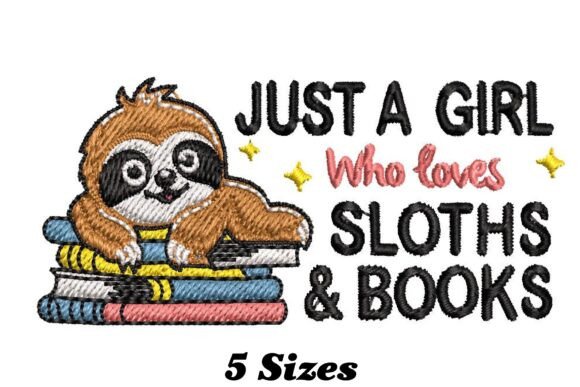
As an embroidery designer who’s digitized and stitched over 2,000 commercial projects—from café aprons to boutique tote bags—I approached Just a Girl Who Loves Sloths and Books with both creative curiosity and production realism. This isn’t just another cute Animal Quotes design; it’s a potential brand signature for handmade shops, indie bookstores, sloth-themed pet brands, or cozy cafés looking to express warmth without sacrificing polish. At first glance, the title alone signals approachability, niche charm, and quiet confidence—ideal for businesses that want to connect emotionally while staying visually cohesive.
First Impression: Playful, Handmade, and Professionally Quirky
Just a Girl Who Loves Sloths and Books lands as friendly—not childish—and intentionally handmade—not sloppy. It avoids cartoonish exaggeration or over-saturated novelty, which makes it far more versatile for small business merch than many “cute animal + quote” designs. The pairing of sloths (a rising symbol of slow living, mindfulness, and gentle authenticity) with books (intellectual warmth, storytelling, community) creates built-in resonance for creatives, educators, librarians, and wellness-focused brands. That duality helps it read as premium rather than decorative—especially when translated into an embroidered patch or chest logo.
Real-World Performance Across Business Applications
In practice, Just a Girl Who Loves Sloths and Books shines in applications where personality matters but professionalism can’t be compromised:
- Embroidered patches: Works beautifully at 2.5"–3.5" height—clean outlines hold well, and the phrase flows naturally across curved edges. Ideal for sew-on or iron-on application on denim jackets, tote bags, or staff uniforms.
- Apron embroidery: Perfect for left-chest placement on cotton or linen aprons—balanced weight, legible at arm’s length, and reinforces a boutique or café’s curated vibe.
- Cap embroidery: Best suited for mid-crown or rear placement—not overly dense, so it won’t stiffen the fabric. Avoid front-center unless scaled to ≥2.25" width and tested on structured caps.
- Tote bag design: Stitches crisply on canvas and duck cloth. The rhythm of “sloths and books” lends itself to horizontal layout, making it highly effective for side-panel or bottom-corner branding.
- Custom apparel & product packaging accents: Looks intentional on kraft paper tags, fabric labels, or stitched onto reusable produce bags—adding tactile credibility to handmade products.
It also performs strongly as a subtle brand identifier: think floral shop staff shirts with a tiny sloth-and-book motif on the sleeve cuff, or a local bakery’s gift box liner stitched with miniature versions. That flexibility supports visual consistency across touchpoints—critical for building brand identity without repetitive overload.
Where to Use Just a Girl Who Loves Sloths and Books With Care
This machine embroidery design is thoughtful—but not universally forgiving. Proceed with caution in these scenarios:
- Small patch sizes under 2": Lettering may lose clarity; test stitch-out before bulk production.
- Curved surfaces like baseball caps or contoured mugs: Confirm digitizing includes proper underlay and pull compensation—some versions of this embroidery file may need minor tweaks for optimal cap embroidery.
- Textured or napped fabrics (e.g., fleece, terry cloth): Requires medium-weight cutaway stabilizer and possibly reduced top thread tension to prevent sinking or shadowing.
- Dark uniforms or high-wash-frequency items: Prioritize high-contrast thread colors (e.g., cream on navy, charcoal on ecru). Avoid pastels on dark backgrounds unless stitch density is verified for coverage.
- Extremely tight letter spacing or fine sloth details: Inspect spacing between “sloths” and “and”—crowding here impacts readability at distance or after laundering.
Impact on Brand Identity and Customer Trust
When used intentionally, Just a Girl Who Loves Sloths and Books strengthens brand identity by signaling values—not just aesthetics. It tells customers: *We value calm, curiosity, and craftsmanship.* That subtext builds trust faster than generic slogans. For Etsy sellers and handmade brands, it elevates perceived product value: a sloth-and-book embroidered patch on a ceramic mug feels considered, not slapped-on. And because it’s inherently shareable (think Instagrammable tote bags or staff photos), it boosts organic buyer engagement—without demanding loud marketing.
Essential Embroidery Designer Notes Before Production
Before launching Just a Girl Who Loves Sloths and Books into your next commercial embroidery project, run these checks:
- Test it in black and white first—assess contrast and legibility without color distraction.
- Verify how it renders at your smallest intended patch size (e.g., 1.75")—does the sloth outline stay distinct? Does “books” remain readable?
- Review thread color contrast against your base fabric—especially on dark or heathered textiles.
- Inspect letter spacing and sloth-to-text proximity—tight kerning may blur after washing.
- Confirm hoop size compatibility with your embroidery machine and intended garment placement.
- Stitch a sample on your actual fabric—account for stretch, nap, and weight.
- Use appropriate stabilizer: cutaway for knits, tear-away for stable wovens, fusible for lightweight linens.
- Create a printable mockup for client approval—show it on a real tote bag or cap template, not just a blank square.
- Compare it beside your other design assets—is it tonally aligned? Does it complement your logo, not compete?
- Confirm commercial licensing—this digital embroidery file must be cleared for resale, branded merchandise, and small business merch use before stitching for clients or inventory.
Remember: Just a Girl Who Loves Sloths and Books isn’t just decoration—it’s a quiet ambassador for your brand’s voice. When digitized thoughtfully and applied with intention, it transforms everyday items—aprons, caps, totes—into memorable expressions of who you are. That’s the power of smart embroidery: not just stitching thread, but stitching meaning.