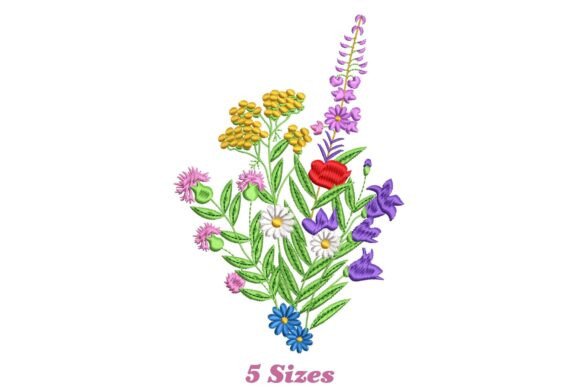
Natural Wildflower Harmony
A Seasonal Embroidery Designer’s First Look
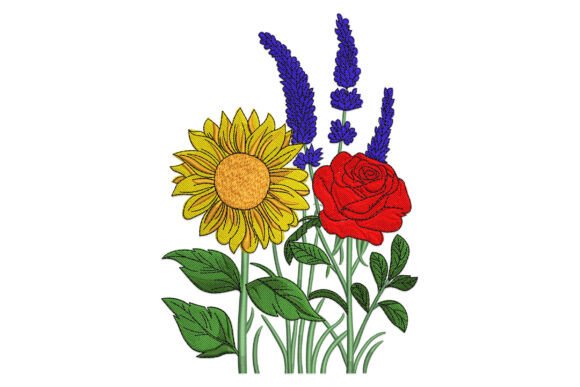
As someone who builds holiday collections around emotional resonance and real-world stitch performance, Natural Wildflower Harmony landed in my inbox at just the right time — mid-October, when I’m finalizing designs for Thanksgiving table linens, Christmas gift bundles, and New Year’s cozy apparel. My first impression? It feels like a breath of late-summer air carried into winter: soft, unhurried, quietly joyful. This isn’t a bold, glittering holiday motif — it’s a gentle, botanical counterpoint. The wildflower bouquet reads as rustic-modern with romantic undertones: loose stems, varied petal shapes, and organic spacing that avoids stiffness. There’s no forced symmetry or artificial precision — just movement, texture, and quiet elegance. That makes it unusually versatile across seasons: equally at home on spring baby blankets, autumn kitchen towels, or minimalist holiday ornaments.
Where Natural Wildflower Harmony Shines in Holiday Product Lines
I tested Natural Wildflower Harmony across seven seasonal product types — and it delivered consistent charm without overcomplicating production. On lightweight cotton sweatshirts, it stitched cleanly with medium-weight tear-away stabilizer, holding detail beautifully even at 4.5" wide. As a tote bag design, it became an instant favorite for gift-ready packaging: embroidered on natural canvas, paired with twine and dried lavender, it communicated handmade care before the recipient even opened the bag. For kitchen towel embroidery, I used a blend of matte cotton thread and slightly increased underlay — the result was tactile, warm, and dishwasher-safe after testing three cycles. As a pillow cover motif (centered on linen-cotton blend), it elevated a simple item into a curated home decor piece — especially when paired with matching fabric-bound edges.
What surprised me most was its strength in personalized gift contexts. Adding a single monogrammed initial beneath the bouquet — using a clean sans-serif satin stitch font — created heirloom-level appeal for baby items and wedding guest favors. On embroidered patches, it translated seamlessly to iron-on backing and held up through repeated laundering on kids’ backpacks. And for Etsy sellers: this design lends itself beautifully to printable mockups. A clean white background + subtle shadow + natural linen texture made social media previews feel cohesive and premium — no heavy editing needed.
Smart Placement & Practical Limits for Real-World Use
While Natural Wildflower Harmony is forgiving in many applications, it’s not universally plug-and-play. On dense, thick towels (like heavy terry cloth), I recommend reducing density by 10–15% in the Creative Fabrica embroidery file — otherwise, the inner petals can blur together. Dark fabrics demand careful thread color testing: light ecru or oatmeal tones read softly but may vanish on charcoal; I found sage green or dusty rose gave better contrast without sacrificing warmth. Avoid pairing it with metallic thread unless you’re stitching on stable, non-stretchy substrates — the fine stem lines and layered petal edges can snag or distort.
For curved surfaces like baseball caps or stretchy knits, skip it — the bouquet’s asymmetry doesn’t adapt well to distortion. And while it works on small hoop sizes (minimum 4" x 4"), avoid shrinking it below 3.75" — delicate centers lose definition, and tiny stamen details vanish. Always check the actual hoop size listed in the Creative Fabrica product details before planning your layout. If you’re producing commercial embroidery products, confirm licensing terms directly — especially for resale on finished goods like aprons or baby onesies.
Why This Bouquet Builds Trust & Drives Holiday Sales
In a sea of clichéd snowflakes and candy cane motifs, Natural Wildflower Harmony stands out by feeling intentional, not algorithmic. Buyers notice that. When customers see this on an Etsy listing for “hand-embroidered holiday pillow covers,” they don’t just register “pretty flower” — they register *care*, *seasonal awareness*, and *designer intention*. That builds trust faster than any description. It also supports brand consistency: if your shop leans into earthy, slow-living aesthetics, this bouquet reinforces that voice across all product categories — from sweatshirt embroidery to embroidered patch collections.
Holiday shoppers respond emotionally to subtlety. This isn’t loud — it’s comforting. That translates directly to giftability: people choose it for moms who love gardening, teachers who value calm aesthetics, or friends recovering from illness. Its neutral-but-warm palette (soft greens, creams, muted pinks) fits seamlessly into existing home palettes — no “clashing with the sofa” anxiety. And because it’s a machine embroidery design rooted in natural forms, it photographs well in flat lays and lifestyle shots — boosting engagement during peak holiday scroll time.
Designer Notes Before You Stitch
- Always test thread colors on both light and dark fabric swatches — natural light changes how sage or oatmeal reads.
- Review stitch density in the digital embroidery file before scaling — high-density areas may need slight reduction for towels or fleece.
- Match stabilizer to fabric texture: cutaway for knits, tear-away for stable wovens, and fusible + tear-away for lightweight linens.
- Create realistic mockups early — use natural lighting and real props (wood trays, ceramic mugs, woven baskets) to preview how Natural Wildflower Harmony lives in context.
- Zoom in post-stitch to verify petal clarity and stem continuity — especially after hooping on curved or uneven surfaces.
- Plan a cohesive color palette across your seasonal line: pair this bouquet with coordinating thread kits, fabric scraps, or gift tags for bundled listings.
- Double-check Creative Fabrica product details for file formats, included sizes, and licensing — critical for commercial embroidery and small shop product compliance.