Delightful Elephant: A Smart Choice for Small Business Merch
First Impression: Friendly, Cheerful, and Professionally Approachable
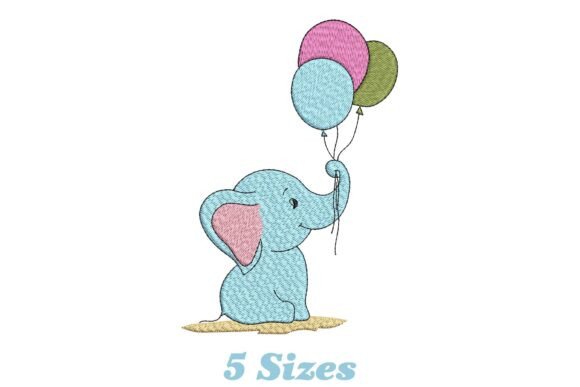
As an embroidery designer who’s developed hundreds of commercial designs for small businesses—from indie bakeries to boutique pet brands—I immediately recognized Delightful Elephant’s quiet strength. The name alone signals warmth and approachability, and the description—“a dash of character,” “cheerful and artistic”—confirms it’s built for human connection, not just decoration. This isn’t a cartoonish or overly stylized baby animal; it carries a gentle confidence that reads as handmade yet polished. For businesses in the Baby Animals category—or those simply seeking soft, memorable charm—it lands perfectly between playful and premium.
Real-World Performance Across Business Touchpoints
Delightful Elephant shines where small businesses need versatility without compromise. As an embroidered patch, it holds crisp detail at 2.5"–3.5", making it ideal for sew-on branding on tote bags, aprons, or staff jackets. On café aprons or florist smocks, its cheerful silhouette reinforces brand friendliness without overwhelming the garment. For cap embroidery, I recommend placing it centered on the front panel—not too high—to preserve balance and avoid distortion from the curve. It also works beautifully as a subtle sleeve accent on work shirts or a chest logo for custom apparel lines sold on Etsy or at local markets.
When used on tote bag design or reusable packaging accents, Delightful Elephant adds instant visual storytelling—especially for eco-conscious boutiques, children’s studios, or wellness brands. Its artistic flow translates well into printable mockups, helping clients visualize how the design elevates their handmade product line before stitching begins. And because it’s described as suitable for towels and home decor, it scales thoughtfully into broader merch ecosystems—think branded guest towels for a boutique hotel or embroidered labels for artisan soap packaging.
Where to Use It Thoughtfully (and Where to Pause)
While Delightful Elephant is highly adaptable, it demands intentional placement. Avoid scaling it below 1.75" for embroidered patch use—fine details like ear contours or trunk curves may lose clarity. On curved surfaces like cap fronts or rounded mugs (if digitized for heat-transfer overlays), always run a physical test stitch to assess outline integrity. Also, tread carefully on dark uniforms or textured fabric like heavy canvas or terry cloth: high stitch density can cause puckering if stabilizer choice isn’t matched precisely. If your version includes delicate interior linework or thin outlines, confirm contrast with your chosen thread colors—especially for black-on-navy or cream-on-khaki applications.
Frequent washing is another real-world factor: this design’s cheerful appeal shouldn’t fade after three launderings. Before mass production, test it on your exact fabric blend with your standard wash cycle. If the original digital embroidery file includes dense satin fill or intricate underlay, consider simplifying inner elements for longevity—especially for staff uniforms worn daily.
Brand Identity Impact: More Than Just Cuteness
Here’s what sets Delightful Elephant apart in practice: it strengthens brand identity without shouting. Unlike loud, trend-driven graphics that date quickly, its timeless cheer supports long-term recognition. Customers remember how a brand *feels*—and Delightful Elephant consistently communicates kindness, care, and creative authenticity. That builds customer trust, especially for handmade businesses where emotional resonance drives loyalty.
Used across multiple touchpoints—aprons, caps, tote bags, even product tags—it creates visual consistency that reads as intentional, not accidental. For Etsy sellers, that cohesion lifts perceived value: buyers see a curated story, not scattered decoration. And because it fits naturally within the Baby Animals niche while remaining flexible enough for non-animal brands (e.g., a mindfulness studio using elephants as symbols of memory and presence), it extends your creative toolkit without locking you into one aesthetic.
Practical Designer Notes You Can’t Skip
Before committing to production, follow these field-tested steps:
- Test in black and white first—it reveals spacing issues, floating elements, and stitch order flaws that color masks.
- Check small patch size performance—resize to 2" and stitch a sample. Does the trunk retain shape? Do eyes read clearly?
- Review thread color contrast—especially if pairing light threads on dark fabric. Not all “cream” threads behave the same under lighting.
- Inspect spacing between elements—tight gaps between ear and head may collapse on low-loft stabilizer.
- Confirm hoop size compatibility—does it fit comfortably in your most-used hoops without re-hooping mid-stitch?
- Test on real fabric—not just tear-away stabilizer swatches. Try it on your actual apron twill or tote canvas.
- Use proper stabilizer—cutaway for stretch knits, medium-weight tear-away for stable wovens, and fusible + tear-away combo for lightweight linens.
- Create a client-approved mockup—use a realistic printable mockup showing Delightful Elephant on their exact cap style or tote bag material.
- Compare beside other design assets—does it harmonize with your current logo, typography, and secondary icons?
- Confirm commercial licensing—since this is intended for small business merch, ensure your embroidery file purchase grants rights for resale, distribution, and branded product use.
Remember: a great machine embroidery design isn’t just about how it looks stitched—it’s about how reliably it performs across dozens of garments, wash cycles, and customer interactions. Delightful Elephant delivers that reliability when approached with intention. Whether you’re launching a new line of custom apparel, refreshing staff apron embroidery, or building cohesive commercial embroidery assets for a growing brand, it’s a thoughtful, scalable foundation—not just another cute graphic.