You Me Happy: A Small Business Embroidery Review
First Impression: Friendly, Whimsical, and Brand-Ready
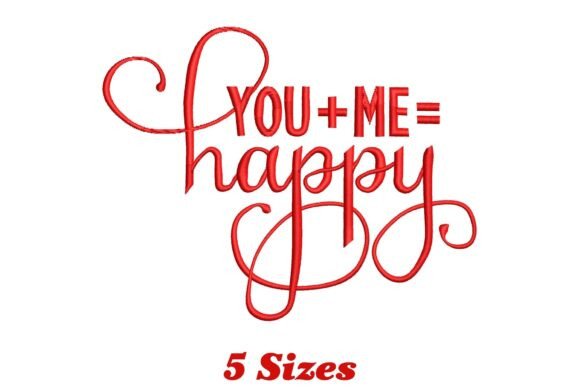
As an embroidery designer who’s developed hundreds of commercial designs for cafés, boutiques, bakeries, florists, and handmade brands, my first read on You Me Happy is immediate and positive: it feels warm, inclusive, and intentionally approachable. The title alone suggests connection—not romance in a clichéd Valentine S Day sense, but joyful partnership, shared energy, or mutual appreciation. That makes You Me Happy unusually versatile for small business merch. It reads as handmade without sacrificing polish, playful without leaning into childishness, and heartfelt without feeling saccharine. For businesses building community—think local coffee shops greeting regulars, pet brands celebrating human-animal bonds, or studios highlighting collaborative creativity—You Me Happy lands with authenticity.
Real-World Performance Across Merchandise Types
In practice, You Me Happy shines where personality meets professionalism. As an embroidered patch sewn onto aprons or tote bags, it adds charm without overwhelming. On staff uniforms—especially chest pockets or sleeve accents—it softens corporate rigidity while reinforcing brand warmth. For cap embroidery, the design’s balanced proportions and open letterforms hold up well at 2–2.5 inches wide, provided spacing and stitch density allow clean thread coverage on curved surfaces. On towels and home decor (as noted in the product description), it delivers visual lift without competing with texture or pattern.
For Etsy sellers and craft-based brands, You Me Happy works exceptionally well as a subtle yet memorable topline accent—think stitched onto the hem of tea towels, the corner of linen napkins, or the flap of reusable produce bags. It also functions beautifully as a customer gift tag or branded packaging accent: small embroidered labels sewn onto kraft paper boxes or fabric pouches elevate perceived value and reinforce handmade product integrity.
Where Caution Is Needed: Practical Production Notes
That said, not every application is equal—and smart embroidery shops know when to pause. You Me Happy should be tested carefully on dark uniforms: fine outlines or light thread colors may disappear without sufficient contrast or underlay stitches. On highly textured fabric like heavy canvas or looped terry cloth, dense fill areas could pucker unless paired with appropriate stabilizer (cutaway or medium-weight tear-away, depending on end use). And while its whimsy reads clearly at standard patch sizes (3"–4"), scaling down below 1.75" risks losing legibility in the “Me” or “Happy” letterforms—especially if the original embroidery file includes delicate internal details or tight kerning.
Cap fronts demand extra attention: curvature compresses vertical space, so verify that the design doesn’t distort when hooped. Likewise, curved surfaces like tote bag gussets or rounded apron pockets benefit from digitized stretch compensation—something you’ll want confirmed in the embroidery file metadata or by requesting a test sew-out from your digitizer.
Brand Identity Impact: More Than Just Cute
Small businesses don’t just sell products—they sell feelings, values, and belonging. You Me Happy strengthens brand identity by visually echoing those intangibles. When customers see it stitched on a barista’s apron or a florist’s tote, it signals care, connection, and intentionality—not generic decoration. That builds trust faster than a slogan ever could. It also supports visual consistency across touchpoints: used as a cap embroidery motif *and* a printable mockup element *and* a product label, You Me Happy becomes a recognizable signature—like a mini-logo with emotional resonance.
Crucially, it avoids overcommitting to seasonal tropes. Though listed under Valentine S Day, You Me Happy isn’t heart-shaped or red-dominant; it’s emotionally flexible enough for year-round use. That longevity protects your investment in digitizing, testing, and client approvals—making it ideal for commercial embroidery shops building scalable design assets for recurring clients.
Essential Designer Checks Before Production
Before sending You Me Happy to the hoop, run these practical checks:
- Test in black and white first—verify contrast, spacing, and outline clarity without color distraction.
- Confirm minimum viable patch size—sew a 1.5" version on your target fabric to assess legibility and thread coverage.
- Review thread color contrast—especially for dark uniforms or textured fabrics; avoid pastels on charcoal unless underlay and stitch density are optimized.
- Inspect letter spacing and kerning—tight letters may merge at small sizes or on low-stitch-count versions.
- Verify hoop size compatibility—some versions may require larger hoops than typical cap or pocket placements allow.
- Test on real fabric + stabilizer combo—don’t rely solely on software simulation; fabric movement changes everything.
- Create a client-facing printable mockup—show how You Me Happy looks on actual aprons, caps, or totes before stitching begins.
- Compare alongside existing design assets—does it harmonize with your logo, typography, and other branded embroidery?
- Confirm commercial licensing—since this is intended for small business merch and resale items, ensure the digital embroidery file permits commercial embroidery use.
Remember: a great machine embroidery design isn’t just about aesthetics—it’s about reliability, adaptability, and alignment with how real businesses operate. You Me Happy delivers on all three—if treated with the thoughtful execution it deserves. Whether you’re stitching for a neighborhood bakery’s staff or curating Etsy branding kits, this embroidery file earns its place in your active design assets—not as a seasonal novelty, but as a quiet, confident expression of shared joy.