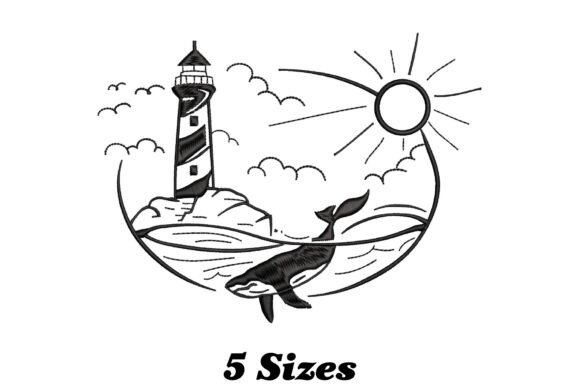
Lighthouse Whale
As a designer who’s spent years working with machine embroidery, I always start by asking: does this design feel like it was made to be stitched? Lighthouse Whale is one of those pieces that immediately speaks to the practical side of embroidery work. Its charm isn’t just in the imagery—it’s in how it translates to real projects. Whether you’re making custom apparel, handmade gifts, or small shop merchandise, this design has potential—but it also comes with some important considerations.
The First Impression
When I first saw Lighthouse Whale, I was struck by its playful yet refined aesthetic. The lighthouse and whale are stylized but not overly complicated, which makes them accessible for a wide range of projects. The composition feels balanced, with enough detail to make it visually interesting without being overwhelming. It’s the kind of design that could work on a tote bag, a baby onesie, or even a holiday ornament. But what really caught my attention was the way the shapes interact—there’s a sense of movement and storytelling that adds depth to the piece.
The theme of marine life fits well within the Marine Mammals category, but it’s not so specific that it limits its use. This is a design that can easily transition between different product types, from casual wear to more decorative items. The visual personality leans toward whimsy, which is perfect for personalized gifts or boutique products that aim to stand out.
Real-Life Embroidery Use Cases
I’ve used Lighthouse Whale on several projects, and it performs well across a variety of applications. For example, when I tested it on a tote bag design, the stitch density was just right—enough to hold up under frequent use but not so dense that it stiffened the fabric. On a sweatshirt, the design looked clean and professional, especially when using a light-colored thread against a dark background. The satin stitch areas were smooth, and the fill stitches didn’t cause any puckering or distortion.
It also works well as an embroidered patch. The size and layout make it easy to hoop and stitch, and the details remain clear even when scaled down. For baby items, the design is gentle and not too busy, which is ideal for nursery decor or onesies. When I tried it on a cap, I had to adjust the hoop size slightly, but the result was still sharp and recognizable.
One thing to note is that Lighthouse Whale isn’t the best fit for very small hoop sizes. If you’re working on something like a hat or a small patch, you might need to split the design into sections or use a larger hoop. It also doesn’t work as well on textured fabrics or thin materials, where the stitches might not sit as smoothly.
Where to Be Careful
While Lighthouse Whale is versatile, there are a few situations where it might not perform as expected. On stretchy or dark fabrics, the thread color contrast becomes more critical. A light-colored thread on a dark background can look great, but if the colors don’t match well, the design might appear washed out or unclear. You’ll want to test it on different fabric types before committing to a project.
For layered garments or curved surfaces like caps, the design may require some adjustments. The corners and edges of the lighthouse and whale can get a bit distorted if the hoop isn’t positioned correctly. Also, if you're planning to use it on a product that will be washed frequently, make sure the stabilizer is appropriate for the fabric type. Too much or too little stabilizer can affect the final appearance.
Another thing to consider is the level of detail. While the overall design is clear, the smaller elements—like the lighthouse window or the whale’s tail—might not show up as well on certain fabrics. If you're creating a printable mockup or digital product preview, you’ll want to check how these details translate in black and white as well as color.
Impact on Visual Appeal and Customer Perception
When it comes to customer engagement, Lighthouse Whale has a lot to offer. Its fun, quirky style makes it appealing for both children and adults. As a handmade product, it adds a personal touch that can elevate a small business offering. Whether you're selling on Etsy or at a craft fair, this design can help differentiate your work from others.
From a branding perspective, it’s consistent and recognizable. It fits well with themes like coastal living, nautical decor, or nature-inspired designs. For commercial embroidery projects, it’s a solid choice that can be adapted to various scales and formats. However, it’s important to ensure that the design aligns with your brand’s tone and audience.
When it comes to giftability, Lighthouse Whale is a strong contender. It’s not too generic, but it’s also not too niche. It works well as a personalized gift for birthdays, weddings, or holidays. The design’s clarity and charm make it a good fit for both handmade and mass-produced items, depending on your business model.
Practical Designer Notes
If you’re planning to use Lighthouse Whale in your embroidery projects, here are a few things to keep in mind:
- Test on scrap fabric first to see how the design looks in different conditions.
- Check thread color contrast against the fabric to ensure visibility and vibrancy.
- Review stitch density to avoid issues with fabric stiffness or thread breakage.
- Confirm hoop size based on the project and fabric type.
- Inspect small details like the lighthouse window or whale’s eye for clarity.
- Test in black and white mockups to see how the design holds up without color.
- Compare light and dark fabric backgrounds to determine the best presentation.
- Use proper stabilizer for stretchy or delicate fabrics.
- Confirm licensing before selling finished items or digital products.
Overall, Lighthouse Whale is a solid machine embroidery design that offers both aesthetic appeal and practicality. It’s a great choice for custom apparel, baby items, holiday gifts, and small shop merchandise. Just remember to test it thoroughly and adapt it to your specific needs. With the right approach, it can become a valuable addition to your design assets and a reliable part of your creative workflow.