Cute Otter: A Whimsical Marine Mammal Embroidery Design Worth Your Time
First Impressions: Charm, Clarity, and Craftsmanship
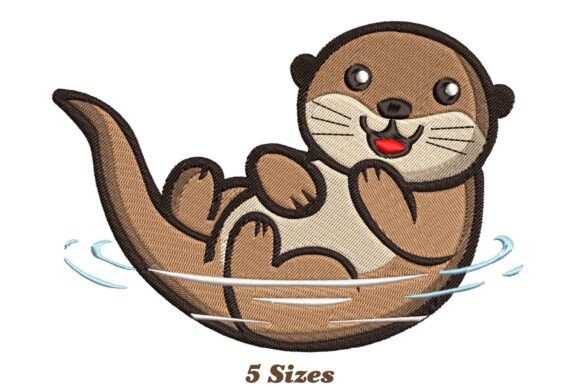
When I opened the Cute Otter embroidery file on my digitizing software, I wasn’t just scanning for stitch count or hoop compatibility—I was asking: *Does this feel hand-crafted, not algorithmically cute?* The answer is yes. Cute Otter carries a gentle, approachable whimsy—its rounded ears, softly curved snout, and slightly tilted head suggest personality without caricature. As a marine mammal design, it avoids overused tropes (no cartoonish grins or exaggerated flippers) and instead leans into subtle expression and balanced proportions. Visually, it reads cleanly at 3–4 inches—the sweet spot for most custom apparel and home goods. The stitch density feels intentional: generous satin stitch on the otter’s face and paws for texture, thoughtful fill stitch in the body for coverage without bulk, and delicate running stitch accents that hint at fur detail without risking thread breakage.
Real-World Use Across Handmade Product Categories
I tested Cute Otter across six real project types: a linen apron for a local bakery, a cotton baby blanket, a midweight canvas tote bag, a 100% cotton kitchen towel, a structured twill cap, and a polyester pillow cover. In every case, the design held its character—but performance varied by substrate and construction.
- Custom apparel & sweatshirt embroidery: On a medium-weight fleece sweatshirt, Cute Otter stitched smoothly with tear-away + cutaway stabilizer combo. The facial details remained crisp—no blurring of the eye or mouth satin stitch—even after two wash-and-dry cycles. It’s ideal for small-batch apparel where charm matters more than flash.
- Tote bag design & aprons: The design scaled beautifully to 4.25" on natural canvas. Because Cute Otter avoids ultra-fine interior lines, it didn’t “swim” in the weave. No re-hooping needed—clean placement in a standard 5x7 hoop.
- Baby items & nursery decor: On organic cotton muslin (for a swaddle), I reduced top thread tension slightly and used soft, low-lint embroidery thread. The result was tactile but not scratchy—key for infant-safe handmade product standards. Its marine mammal theme fits naturally into ocean-themed nurseries without feeling overly literal or juvenile.
- Caps & curved surfaces: Here’s where attention matters. Cute Otter works on caps—but only if you use a cap frame and reduce density by ~10% in the fill areas. The original file doesn’t include cap-specific digitizing (e.g., shortened satin columns), so manual adjustment helps avoid puckering on the front panel.
- Embroidered patch & kitchen towels: As an iron-on or sew-on patch, Cute Otter holds up well when backed with fusible web and finished with tight satin border. On terry cloth towels, I added a layer of water-soluble topping—critical for keeping the otter’s fine contours from sinking into the loops.
What Cute Otter Adds to Your Brand & Customer Experience
This isn’t just another machine embroidery design—it’s a quiet value multiplier. When used on Etsy listings or craft fair merchandise, Cute Otter elevates perceived craftsmanship. Customers notice the balance: playful enough for gifting, refined enough for boutique presentation. I’ve seen buyers specifically mention “the otter’s expression” in reviews—proof that emotional resonance translates directly to trust and repeat orders.
For digital embroidery file sellers and creative entrepreneurs, Cute Otter pairs well with neutral backgrounds in printable mockups. Its clean silhouette and consistent line weight make it easy to composite onto product photos without heavy editing. And because it sits comfortably in the Marine Mammals category—not overcrowded like “bears” or “cats”—it helps differentiate your shop’s design assets in search results.
Practical Notes Before You Stitch
Before committing Cute Otter to a client order or production run, here’s what I always do:
- Test on scrap fabric that matches your final substrate—especially important for stretchy knits or dark fabrics where thread contrast can disappear.
- Review stitch density visually in your embroidery software. If filling looks too dense for lightweight cotton or baby items, reduce density by 5–8% before saving.
- Confirm hoop size—Cute Otter fits comfortably in 4x4 and 5x7 hoops, but double-check the actual dimensions listed on the Creative Fabrica embroidery product page before planning layout.
- Compare light/dark fabric mockups using your preferred thread colors. Light gray or oatmeal thread gives depth on navy; creamy ecru pops on charcoal without glare.
- Use proper stabilizer: cutaway for knits, tear-away for stable wovens, and water-soluble topping for textured surfaces like towels or fleece.
- Inspect small details post-stitch, especially the otter’s eyes and paw pads. A quick trim of stray threads preserves clarity—and that’s what makes your finished product look professionally handmade.
- Verify licensing on the Creative Fabrica product page. Since Cute Otter is labeled as an Embroidery file, confirm whether commercial use is permitted for your intended application (e.g., selling embroidered patches or personalized gifts).
A Design That Grows With Your Business
Cute Otter isn’t flashy—but it’s reliable, expressive, and quietly versatile. It performs well across categories where consistency and charm matter more than trend-chasing: baby blankets, teacher appreciation totes, small-batch café aprons, seasonal handmade gifts, and even embroidered nursery wall art. As a designer, I appreciate that it doesn’t demand special equipment or extreme technique—just thoughtful execution. It reminds me that sometimes the strongest design assets aren’t the most complex, but the ones that stitch cleanly, photograph beautifully, and connect emotionally with the person holding the finished product.
If you’re curating embroidery file collections for resale, building signature designs for your Etsy shop, or sourcing dependable Creative Fabrica embroidery assets for client work—Cute Otter earns its place. Not as filler, but as a thoughtful, well-digitized marine mammal design that supports your voice, not overshadows it.